In the industrial world, bearings are one of the essential components used to keep machine rotation stable and reduce friction between moving parts. Almost all industrial machines use bearings, including electric motors, conveyors, pumps, gearboxes, and heavy equipment. Since every application has different requirements, each bearing also has a specific code that indicates its specifications and characteristics.
Bearing codes are not just random numbers and letters. They contain information about the bearing type, size, capacity, and additional features. Understanding how to read bearing codes is very important to ensure accurate bearing replacement, avoid specification errors, and help maintain optimal machine performance. In this article, we will discuss how to read bearing codes and understand the meaning behind each number and letter more easily.

What Is a Bearing Code?
A bearing code is a combination of numbers and letters used by manufacturers to identify the specifications of a bearing. This code is usually printed directly on the bearing body or product packaging. Each code has a specific meaning that indicates the bearing type, bore size, series, and additional features such as seals and clearance.
In the maintenance and engineering world, bearing codes are very important because they help technicians determine the correct bearing for a specific machine application. By understanding bearing codes, the replacement process becomes easier without having to disassemble the entire machine specification.
In addition, the use of bearing codes helps reduce the risk of installation errors. Bearings with incorrect sizes or types can cause excessive vibration, overheating, and even more serious machine damage.
Why Is It Important to Understand Bearing Codes?
Understanding bearing codes is very helpful in machine maintenance and component replacement processes. In many cases, technicians only need to check the old bearing code to determine the replacement without having to perform detailed remeasurement.
Besides simplifying identification, understanding bearing codes also helps ensure that the bearing used matches the application requirements. This is important because every machine has different load characteristics, speeds, and working conditions.
For example, electric motors usually require bearings with high rotational speed and low friction levels, while conveyors and gearboxes require bearings with higher load-carrying capacity. By reading bearing codes correctly, companies can reduce downtime, increase machine lifespan, and minimize maintenance costs.
Basic Structure of Bearing Codes
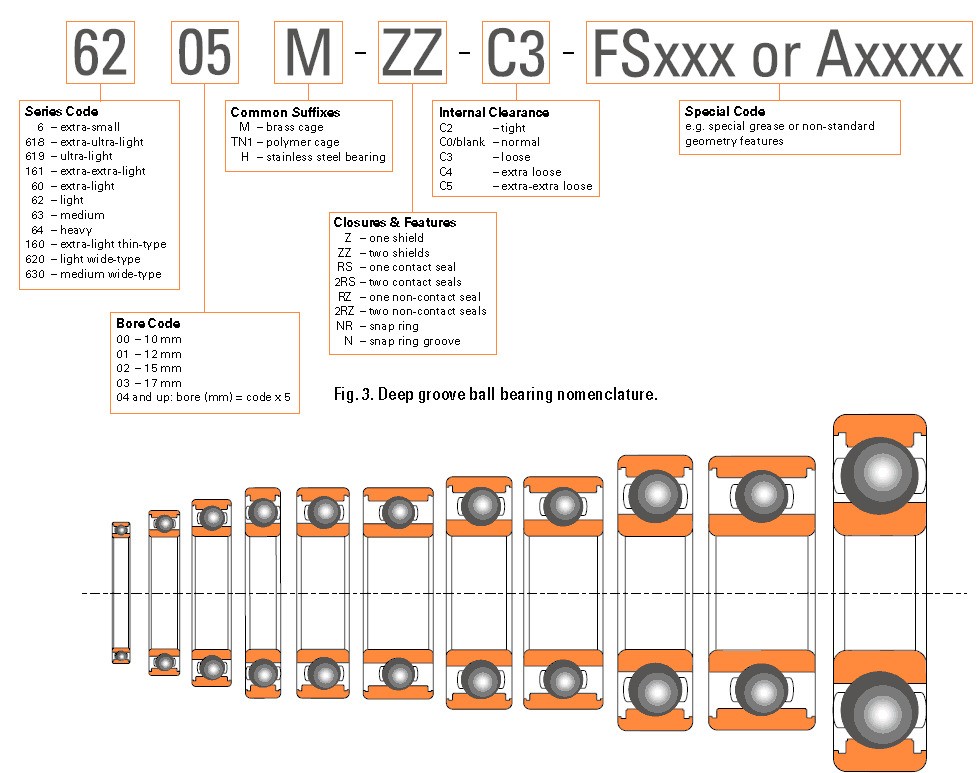
In general, bearing codes consist of a combination of numbers and letters with specific meanings. Although the code format may vary slightly depending on the manufacturer, the basic structure usually includes:
- The first number indicates the bearing type
- Series numbers indicate bearing dimensions and load capacity
- The last two digits indicate the bore diameter size
- Additional letters or suffixes indicate special features
For example, in the bearing code 6205 ZZ, each number and letter has a different meaning. Therefore, it is important to understand each part of the code individually to identify the bearing specifications more easily.
How to Read Bearing Codes Based on Numbers and Letters
1. The First Number in the Bearing Code
The first number in a bearing code usually indicates the bearing type or category. Each number represents a specific bearing design and function.
Some commonly used codes include:
- 6 = Deep Groove Ball Bearing
- 7 = Angular Contact Ball Bearing
- 2 = Spherical Roller Bearing
- 3 = Tapered Roller Bearing
This code helps technicians understand the basic characteristics of the bearing before checking other specifications.
2. Bearing Series Digits
The next digits usually indicate the bearing series. The bearing series relates to the thickness, load capacity, and overall bearing dimensions.
For example:
- Series 62 = medium duty
- Series 63 = heavy duty
The larger the bearing series, the higher the load capacity is typically. Therefore, selecting the correct bearing series must match the machine application requirements.
3. Bearing Bore Size Digits
The last two digits in the bearing code indicate the inner diameter or bore size of the bearing. This dimension is very important because it must match the machine shaft diameter.
For bearing bore codes above 04, the reading method is simple: multiply the number by 5.
Examples:
Bore Code | Shaft Diameter |
04
| 20 mm
|
05
| 25 mm
|
06
| 30 mm
|
12
| 60 mm
|
By understanding these bore codes, technicians can determine the correct shaft size without manual measurement.
4. Meaning of Additional Bearing Letters (Suffix)
Besides numbers, bearings also include additional letters or suffixes that indicate specific features. These suffixes are usually located at the end of the bearing code.
Some common suffixes include:
- ZZ = Double metal shield
- 2RS = Double rubber seal
- C3 = Greater-than-standard clearance
- TN9 = Polyamide cage
Suffixes are important because they determine the bearing characteristics for specific operating conditions, such as dusty environments, high temperatures, or high-speed rotation.
Examples of Reading Bearing Codes
Example of Bearing 6205 ZZ
The bearing code 6205 ZZ can be interpreted as follows:
- 6 = Deep Groove Ball Bearing
- 2 = Medium duty series
- 05 = 25 mm bore diameter
- ZZ = Double metal shield
This means the bearing is a deep groove ball bearing with a 25 mm shaft size and metal shields on both sides.
Example of Bearing 6308 2RS C3In the bearing code 6308 2RS C3, each section means:
- 6 = Deep Groove Ball Bearing
- 3 = Heavy duty series
- 08 = 40 mm bore diameter
- 2RS = Double rubber seal
- C3 = Greater-than-standard clearance
This type of bearing is commonly used in industrial applications with high rotational speeds and heavier operating temperatures.
Bearing codes are important identifiers that indicate the type, size, series, and special features of a bearing. By understanding how to read bearing codes, technicians and industrial users can more easily determine the correct bearing for specific machine and application needs.
Understanding bearing codes also helps reduce installation errors, speed up maintenance processes, and maintain optimal machine performance. Therefore, understanding the meaning of each number and letter on a bearing is essential in the modern industrial world.
If you need industrial bearings or assistance in determining the right bearing specifications, the SLS Bearings team is ready to help provide solutions that match your industrial operational needs.

 id
id


 Contact Us