Electric motors are the driving force behind modern industrial automation. From conveyor belts moving products through a warehouse to robotic arms assembling components on a manufacturing line, electric motors convert electrical energy into the mechanical energy that keeps operations running.
Understanding the types of electric motors available, and how each one handles the demands of different applications, is the starting point for making the right selection. The wrong choice leads to premature failure, unplanned downtime, and higher operating costs. The right choice delivers years of reliable, efficient performance.
This guide walks through the key factors to consider when selecting electric motors, helping you make informed decisions that match your operational needs and environment.
How an Electric Motor Works: Converting Electrical Energy into Mechanical Power
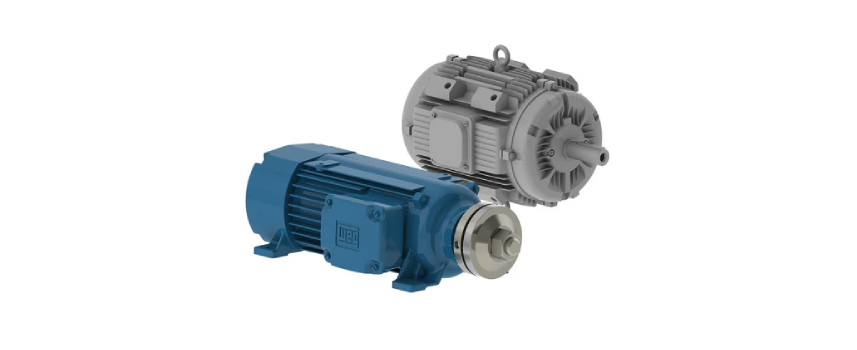
Think of an electric motor as a device that turns electrical power into movement. When you supply electric current to the stator windings (the coils of wire wrapped around the stator core inside the motor casing), it triggers electromagnetic induction.
This creates a rotating magnetic field inside the stator frame that pushes and pulls against the rotor (the rotating part at the centre of the motor), causing it to spin.
The force generated by this interaction between the magnetic field and the rotor is what produces rotational motion at the motor shaft, which is then transferred to whatever the motor is driving, whether that is a conveyor belt, a pump, or a robotic arm.
Different motors achieve this conversion of electrical energy into mechanical energy in different ways. Some use rotor bars, metal rods inside the rotor that react to the rotating magnetic field, while others use permanent magnets that are already magnetised and respond directly to the field around them. The method used affects how the motor behaves, how much control you have over its speed, and how well it holds up in different operating conditions. That is why choosing the right electric motor for each application matters as much as choosing the right size.
Choosing the Right Electric Motor for the Job
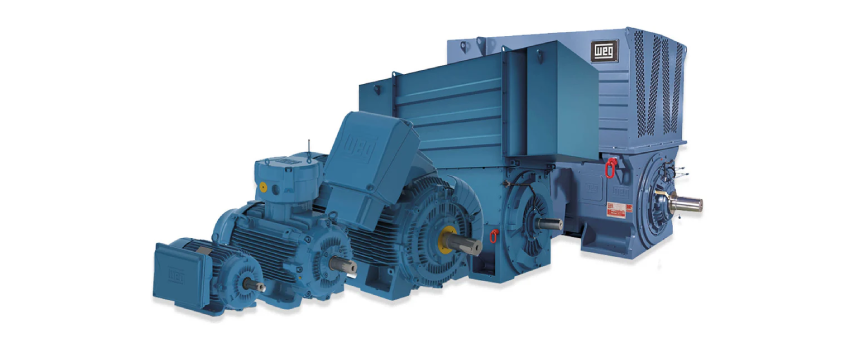
Not all electric motors are built the same, and not all applications have the same requirements. Matching the right motor type to the demands of each application, based on speed, load, torque, and duty cycle, is what separates a reliable long-term installation from one that causes repeated problems.
AC Motors and Induction Motors
AC stands for alternating current, referring to the type of electrical power supply the motor runs on. Unlike direct current which flows in one direction, alternating current switches direction repeatedly, and it is this characteristic that makes AC motors particularly well suited to running at constant speed over long periods. AC motors like the three-phase induction motor are the workhorse of factory automation. They are robust, cost-effective, and well suited to applications that require continuous rotation at constant speed. Conveyor systems, pumps, fans, and compressors all typically run on AC induction motors powered by AC power from the mains supply.
DC Motors and Brushless Motors
DC stands for direct current, meaning the motor runs on electrical power that flows consistently in one direction rather than alternating. DC electric motors run on direct current from a DC power supply rather than AC power, and they offer more precise speed control than most AC motors. This makes them a better fit for applications where the motor's output needs to vary frequently or respond quickly to changing load conditions. The supply voltage provided to a DC motor directly influences its speed, making speed control straightforward through simple voltage adjustment.
Brushed DC motors are cost-effective for lighter-duty applications, while brushless motors eliminate the wear associated with physical brushes, offering longer service life and reduced maintenance. In brushless motors, permanent magnets on the rotor interact with the magnetic field produced by the stator windings, with the control circuit managing rotor position to sustain continuous rotation efficiently.
For highly specialised motion control applications, servo motors and stepper systems offer precise positional control beyond what standard AC or DC motors provide.
WEG Motors offers a comprehensive range of electric motors covering AC motors, DC motors, and other specialised variants. Their product range focuses on reliability and energy efficiency. These features matter greatly when motors run non-stop in demanding production environments.
Built to Handle Tough Environments
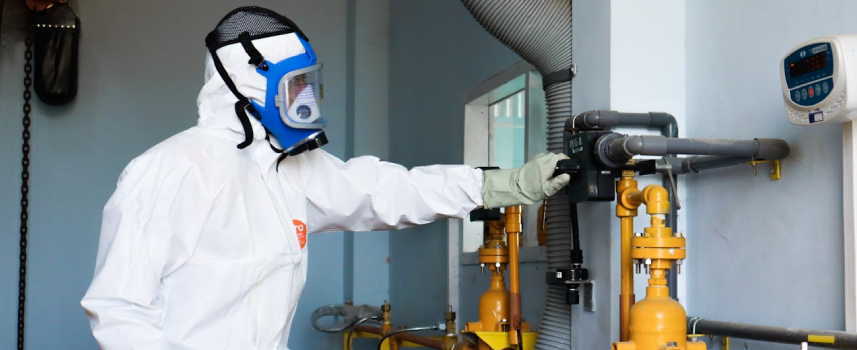
Factory floors present some of the most challenging conditions that electrical equipment has to deal with. Dust, moisture, chemical exposure, and temperature extremes all take a toll on electric motors that are not adequately protected for their environment. A motor that performs well in a clean, climate-controlled facility may fail rapidly when installed in a foundry, a food processing plant, or an outdoor application.
IP ratings, or Ingress Protection ratings, define how well a motor's enclosure protects against solid particles and liquids. An IP55-rated motor is protected against dust ingress and low-pressure water jets, making it suitable for most general environments. Applications involving heavy washdowns, submersion, or highly corrosive atmospheres require higher protection ratings and specialised enclosure materials.
Temperature range is equally important. Motors operating in cold storage environments need to be rated for low-temperature operation. Motors in foundries, furnace areas, or tropical outdoor installations must be able to sustain continuous rotation at elevated ambient temperatures without degrading. Selecting a motor with a thermal class appropriate to its operating environment is a basic requirement, not an optional consideration.
In environments where explosive gases or dust are present, such as chemical plants, grain handling facilities, or oil and gas installations, motors must meet the appropriate local and international safety standards. Installing a standard, non-suitable motor in a hazardous area is both a safety risk and a compliance failure.
Keeping Heat Under Control
Heat is one of the most damaging factors in electric motor operation. When a motor runs hotter than its design allows, whether due to overloading, insufficient cooling, or operating in a high ambient temperature, the insulation on its stator windings degrades. Once insulation breaks down, electrical faults develop and motor failure follows. Managing heat effectively starts at the selection stage, not after a problem arises.
Motor cooling method is a key selection criterion. Most standard motors use an external fan mounted on the motor shaft to draw air across the motor casing. This works well when the motor runs at or near its rated speed. However, when motors are used with variable frequency drives to achieve precise speed control across a wide range, the cooling fan slows down at lower speeds, reducing its effectiveness precisely when the motor may be working hardest. In these applications, motors with separate forced cooling systems or enhanced thermal ratings are the right choice.
Load torque also plays a role in heat generation. A motor consistently running close to its maximum torque output will run hotter than one operating well within its rated capacity. Specifying a motor with sufficient headroom above the expected load torque, rather than selecting the smallest motor that technically meets the requirement, extends service life and reduces the risk of thermal failure.
Making Sure Everything Works Together
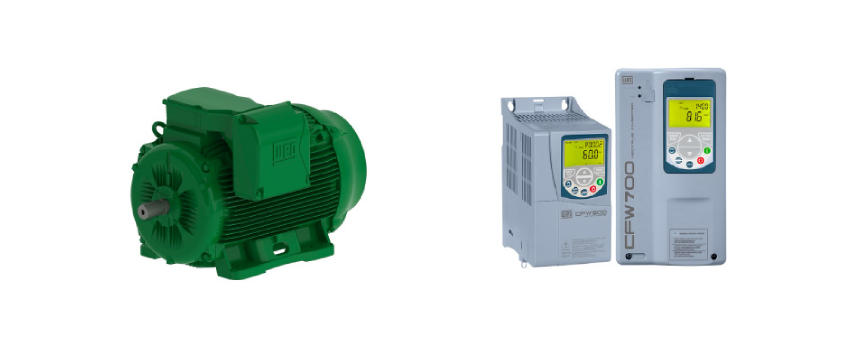
An electric motor does not operate in isolation. It is part of a wider system that includes a power supply, drive or inverter, control circuit, and the mechanical load it is connected to. Selecting components that work together correctly is just as important as selecting the right motor itself.
Variable frequency drives, also known as inverters, are widely used to control the speed of AC motors by varying the frequency of the AC power supply delivered to the motor. An inverter does not just control speed. It also protects the motor by enabling soft starting, which reduces the mechanical and electrical stress of bringing a motor up to speed under load. This extends motor life significantly in applications where motors start and stop frequently, such as conveyor systems, pumps, and compressors.
Matching the motor's voltage and power supply requirements to the available electrical power in the facility is a fundamental step that is sometimes overlooked in the specification process. Ensuring that the motor's frame size, shaft dimensions, and mounting configuration are compatible with the mechanical system it will drive prevents costly fitment issues during installation.
Control system compatibility is increasingly important as automation becomes more sophisticated. Motors used in automated systems need to communicate reliably with the control systems managing them, whether through simple on/off switching, analogue speed references, or digital fieldbus protocols. Selecting motors and drives from manufacturers who design their products to work together simplifies integration and reduces the risk of compatibility issues in the field.
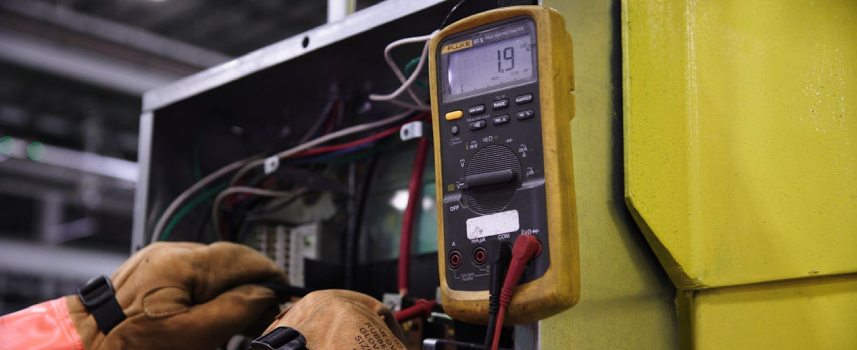
Keeping on top of motor health before problems develop is where predictive maintenance comes in. Here at SLS Bearings, we offer
predictive maintenance for electric motors and use specialised testing equipment to monitor motor condition, trend insulation health, and plan maintenance schedules proactively. Catching issues early means less unplanned downtime and longer motor service life.
Conclusion
Selecting the right electric motor is not just a technical decision, it is about reliability. The motor type, protection rating, thermal management, and system compatibility all play a role in determining how well an automation system performs over the long term. Getting these decisions right from the outset reduces downtime, lowers maintenance costs, and keeps production running the way it should.
Here at SLS Bearings, we partner with world-class motor manufacturers like WEG to provide a comprehensive range of electric motors and inverters designed to keep your operations running reliably and efficiently. Browse our
Electric Motors and Inverters range to find the right solution for your setup, or
contact our SLSPRO team for expert guidance on motor selection and system integration.

 sg
sg


 Contact Us