End effectors are critical for robotic systems in industrial automation, especially in manufacturing and logistics. They help automate tasks such as assembly, machine tending, packaging, inspection, and material handling.
This article explains what an end effector is, their types and functions, key factors for choosing an effector, as well as maintenance tips.
What Are End Effectors?
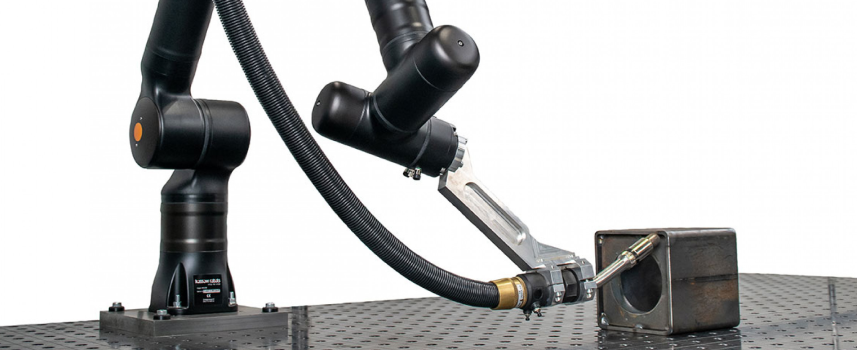
End effectors are often referred to as End-Of-Arm Tooling (EOAT) or robot end effectors. They convert robot motion control into useful work such as gripping, measuring, welding, fastening, spraying or polishing.
An end effector is attached to the end of a robotic arm's wrist, enabling it to interact with materials or manipulate objects during the manufacturing process physically to perform specific tasks. This helps industrial automation processes, increasing efficiency and improving product quality.
End effectors are classified into three groups:
- Grippers: Used for holding, picking, and placing objects, commonly being mechanical, vacuum, magnetic, or servo-powered.
- Sensors: Used for measuring and data collection, able to react to changes in the environment and adapt processes accordingly.
- Process Tools: Used for working on specific processes in robotic systems, such as welding torches, paint sprayers, sanding heads, or cutting lasers.
Hybrid end effectors often combine multiple functions in a single device. Cobot end effectors are usually lighter, rounded, and designed for human-robot collaboration, with safety features such as passive compliance, soft pads, and integrated controls.
How Do End Effectors Work?
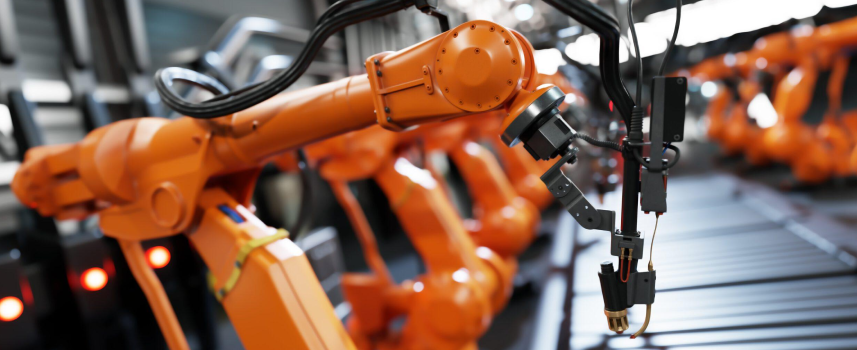
The
robotic arm provides precise positioning, while the robot end effector performs the necessary action. Different end effectors serve different needs. Thus, mechanical interfaces, including mounting flanges, adapter plates, and quick-change couplers boost efficiency, allowing users to swap tools to address different needs without rebuilding the robot end.
In fast-paced, unpredictable working environments, sensors help robots perceive the environment and its changes, allowing them to work better. Feedback comes from a range of sensors, including force sensors, force-torque sensors, proximity sensors, range sensors, light sensors, magnetic sensors and vision sensors.
Vision sensors provide critical visual feedback for positioning, and vision systems provide visual data for parts-sorting and inspections. Force and torque sensors measure applied force during tasks, while proximity sensors detect the distance to nearby objects.
Overall, sensors gather data to improve precision and quality control, as well as enhance the functionality of robotic end effectors.
Common Types of End Effectors
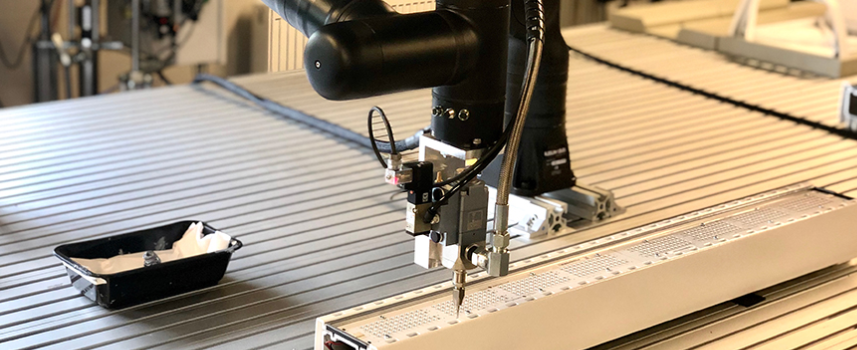
Most factories use different robot end effectors depending on specific tasks, product shape, and required force.
Grippers
Grippers are the most common robot end effectors and are widely used for assembly tasks:
Servo, Mechanical and Jaw Grippers
- Servo Grippers: Allow precise control over grip position and force, making them suitable for handling delicate objects. Useful for precision assembly and highly precise handling, but may require higher operating costs and need more complex control systems than simple pneumatic grippers.
- Mechanical and Jaw Grippers: Usage of jaws or "fingers" to grab objects, creating a stable grasp on bearings, gears, housings, or machined parts. While common for moving and assembly tasks, they may not be effective for handling irregularly shaped objects.
Vacuum and Magnetic Grippers
- Vacuum Grippers: Utilise suction cups or vacuum cups for non-porous objects such as cartons, trays, metal sheets and glass panels. They are used mostly to lift flat, smooth objects in packaging, palletising and logistics pick and place lines. They are generally secure and versatile, but may not be effective for handling heavy or porous objects.
- Magnetic Grippers: Handle ferromagnetic metals using magnetic fields efficiently while minimising damage to the materials. They are effective for steel plates, stampings and machined components, but are not suitable for non-ferromagnetic materials.
Other Specialised Grippers and Adaptive Designs
- Adaptive Grippers: Handle irregularly shaped objects, including bagged products, castings and mixed SKUs.
- Soft Grippers: Handle fragile food products, perishable items and lightweight consumer goods in the food and beverage industry, where food safety is important.
- Needle Grippers: Used commonly for fabrics and foams.
These other end effectors trade speed for flexibility and are often used in cobots, smart robotics cells and high-mix production where end effector capabilities matter more than maximum cycle speed.
Sensor and Inspection End Effectors
Sensor-based end effectors focus on inspection and data collection. Cameras, barcode readers, laser scanners and probes are used to check dimensions, labels, and defects.
Sensors enhance robots' ability to interact with their environment, reduce human error and support consistent quality across shifts.
Process Tools End Effectors
Process tools are end effectors that change the workpiece. These tools perform operations like welding and painting; for example, screwdrivers, riveters, glue dispensers, spray nozzles, sanding tools, deburring tools, and welding torches.
Process tools can also perform tasks like grinding and deburring, removing sharp edges or inconsistencies from materials, such as metals, steel, and alloys, leaving the material with smooth edges and surfaces. There are many different process tools for various manufacturing operations, including automotive, electronics, and metal fabrication. The construction industry employs end effectors for tasks like drilling and welding, healthcare uses them for precise medication dispensing, and in agriculture, end effectors support tasks such as harvesting.
What to Consider When Choosing End Effectors
End effectors are critical for robot task performance, and choosing the right one depends on task requirements.
Key factors for consideration:- Task: Pick and place, welding, inspection, precision assembly or finishing.
- Part: Weight, size, surface, fragility, and irregularly shaped objects.
- Environment: Cleanroom, dusty, wet, hot, or food safety area.
- Robot: Payload must include the end effector, part and additional components.
- Compatibility: End effectors must be compatible with the robotic system, including mounting, air supply, I/O and software.
Simple tools may require minimal maintenance and suit repetitive work. More flexible servo or adaptive tools may need complex control systems but improve handling range. Active compliant technology allows robots to apply precise forces, which helps assembly and polishing.
If you are comparing cobots or end effector options, SLS can help review your line and
cobot requirements.
Maintaining and Changing End Effectors

Regular maintenance keeps robotic systems productive. While some end effectors require minimal maintenance, basic checks are still necessary to ensure safety and efficiency.
Some inspection tips:- Inspect jaws, pads, and suction cups for wear
- Check bolts, hoses, cables, and sensor mounts for damages
- Replace filters, rubber jaws, and vacuum cups by cycle count or according to a fixed schedule
- Document grip force, vacuum levels, applied force limits, and program settings so replacements are quick and repeatable
Conclusion
End effectors turn robot motion into productive work, from grippers to advanced process tools and sensor packages. Correct sizing, compatibility checks, and maintenance help ensure safe, reliable performance across pick and place, assembly, welding, and inspection.
SLS supports automation needs with components and
cobots for factories that need flexible, cost-effective, and highly reliable robotic tools.
If you are planning or upgrading robotic systems,
contact SLS for guidance on end effector selection and cobot integration.

 sg

.webp)



 Contact Us
