Choosing the right linear motion components can mean the difference between a machine that hits cycle time targets for years and one that bleeds money through unplanned downtime. This guide covers the components, applications, and selection criteria that engineers and procurement teams need to specify linear motion systems with confidence.
SLS Bearings partners with Schaeffler, a leader in motion technology, to supply a comprehensive range of linear motion components and provide sizing and selection support based on load, stroke, duty cycle, and environment.
What Is Linear Motion?

Linear motion refers to controlled movement along a straight line, one-dimensional motion where a moving object travels in one direction along a straight path, driven by a push or pull force. In linear motion, all parts of the object move the same distance in the same direction.
This contrasts with rotary motion, where shafts, gearboxes, and spindles spin to generate torque. In most machines, rotary drives are converted into linear travel through screws, belts, or rack-and-pinion mechanisms. Industrial linear motion systems combine guides, drive elements — ball screws, belt drives, or linear motors — bearings, and feedback devices for accurate, repeatable positioning.
The goal is stable position control, a predictable final position, low friction, and long service life under continuous-duty operation.
Core Components of Linear Motion Systems

These components are the building blocks used across robotics, CNC machines, semiconductor tools, and packaging lines.
- Linear guides and profile rail linear guides: The main support and guidance elements, providing stiffness, load capacity, and proper alignment for moving carriages. Linear guides provide smooth, stable, and accurate movement while reducing deflection and vibration. Schaeffler's Monorail Guidance System is a leading example, as a pre-assembled profile rail solution for applications demanding long travel distances, high load capacity, rigidity, and low friction.
- Linear bearings and linear shafting: Round shaft plus bearing configurations for automation gantries, small medical devices, and light- to medium-load transport axes.
- Ball screws: High-efficiency screw drives converting rotary motion to linear movement. Ball screws minimise friction using recirculating ball bearings, delivering high positioning accuracy in precision stages.
- Lead screws: Simpler, often self-locking alternatives suitable for lower speed, quieter operation where backdriving must be minimised. Lead screws trade efficiency for simplicity and load-holding capability.
- Linear motors: Direct-drive solutions that generate force directly along a linear path without mechanical transmission, enabling high-speed, high-precision moves with minimal maintenance.
- Linear actuators: Integrated systems combining guide, drive, housing, and sometimes encoders — pre-engineered axes for robotics and handling systems.
- Telescopic rails: Extendable elements for pull-out movements with controlled, low-noise extension and retraction in machine access panels and drawers.
How Industrial Linear Motion Systems Work

Rather than textbook formulas, here is how these systems operate in real machines and what performance factors matter.
A drive source such as a servomotor, stepper, or linear motor, generates a net force transmitted via ball screw, belt, or direct drive along a straight track of linear guides to move the payload. Feedback devices, including encoders, linear scales, and limit switches monitor instantaneous velocity and position so controllers achieve precise target positions.
In a pick-and-place axis, the controller ramps the carriage at constant acceleration to a defined final velocity, holds constant velocity through the traverse, then decelerates. This profile minimises cycle time while protecting mechanics. Uniform linear motion involves constant speed and zero acceleration during the cruise phase, while non-uniform linear motion involves changes in speed over time during ramp-up and ramp-down phases.
Preload and minimal backlash in ball screws and profile rail blocks maintain accuracy over millions of cycles. Optimised lubrication, sealing, and contamination protection directly impact service life, noise level, and smoothness. SLS Bearings works with engineering teams to match component performance with required cycle times and uptime targets.
Industrial Applications of Linear Motion Technology

Linear motion technology underpins high-throughput, high-accuracy production across industries where downtime costs are measured in thousands per hour.
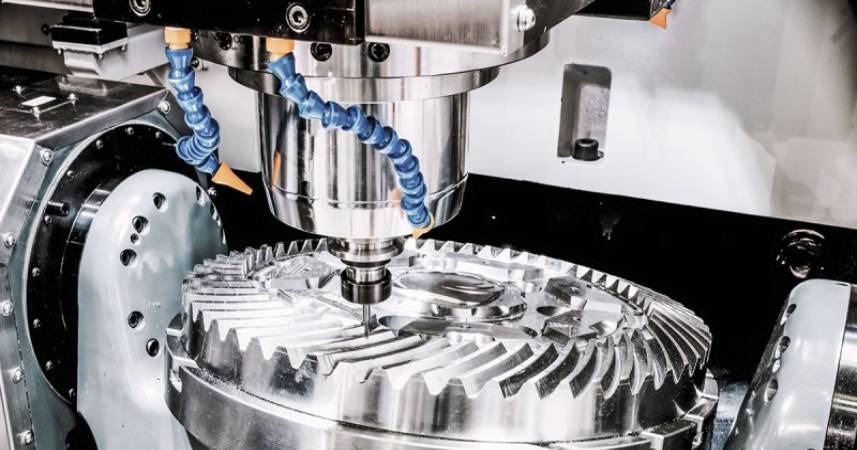
- CNC machine tools: Profile rail guides and ball screws are the workhorses of CNC machining centres, delivering the rigidity and positioning accuracy required in automotive and aerospace production.
- Industrial automation and robotics: Industrial robots use linear actuators and guides for pick-and-place, palletising, and inspection. Robotic arms rely on linear motion for accurate operation across smart factory lines.
- Semiconductor manufacturing: Cleanroom-ready guides, ironless linear motors, and precision ball screws enable wafer handling and lithography stages with sub-micron positioning. Linear motion systems are critical in semiconductor manufacturing equipment where contamination control and system accuracy are non-negotiable.
- Medical devices and imaging systems: CT and MRI patient tables, surgical robots, and diagnostic lab automation use low-noise, compact linear motion assemblies. Linear actuators enable precise movement in medical devices including infusion pumps and positioning stages.
- Packaging, printing, and food and beverage: Synchronised linear axes drive labelling and filling machines at high speeds with washdown-compatible components.
- Electronics assembly: Pick-and-place machines operate at high speeds with rapid reversals, relying on controlled instantaneous velocity profiles to avoid component damage.
SLS Bearings works with suppliers and clients to standardise component platforms and improve overall equipment effectiveness.
Selecting the Right Linear Motion Solution

Correct selection reduces downtime and lifecycle cost. Specifying components correctly from the outset is always more cost-effective than correcting a poorly matched system after installation.
Load accuracy and repeatability, stroke length, duty cycle, and desired cycle time are the primary factors when choosing components. Environmental conditions including temperature, humidity, washdown requirements, vacuum, cleanroom classification, and dust levels influence materials, seals, coatings, and lubrication strategies.
Drive type selection should be evaluated against speed requirements, constant acceleration needs, positional accuracy, backlash tolerance, and budget. Proper alignment, base rigidity, and mounting tolerances are non-negotiable for achieving specified performance. Early collaboration between mechanical, electrical, and controls engineers ensures motors, drives, feedback devices, and mechanical components are correctly sized as a system.
For applications with unique requirements, whether unusually high loads, extreme environmental conditions, or tight space constraints, SLS Bearings and Schaeffler offer custom linear motion solutions tailored to specific performance needs, ensuring a seamless fit within existing systems with minimal modification.
Installation, Maintenance, and Reliability

Even premium components fail early without proper installation and care.
Follow manufacturer alignment procedures for linear guides and ball screws, using reference edges, torque sequences, and verification with dial indicators or laser alignment tools. Select the correct lubrication type and interval to minimise friction, noise, and wear. Over-lubrication attracts dust while under-lubrication accelerates wear.
Implement regular inspection schedules covering preload, smooth travel, seal condition, and contamination on rails and actuators, particularly in dusty or washdown environments ensuring hygiene compliance and minimal downtime in food-safe environments. Predictive maintenance approaches, like monitoring motor current, temperature, and vibration trends, allow teams to catch early degradation before unplanned stops occur.
Keeping critical spares including guide blocks, ball nuts, and actuator assemblies on hand for high-uptime assets reduces recovery time when components reach the end of their service life. Standardising component types across lines simplifies inventory and procurement. Here at SLS Bearings, we support plant teams with machine inspection services, failure analysis, replacement recommendations, and upgrade paths when older systems reach their limits.
Conclusion
Correctly specified linear guides, ball screws, linear motors, and actuator systems drive higher accuracy, throughput, and reliability across CNC machines, robotic arms, semiconductor tools, medical devices, and packaging lines. Getting the specification right from the start and maintaining components correctly throughout their service life is what separates high-performing automation from costly, unplanned downtime.
Here at SLS Bearings, we understand that effective linear motion systems are integral to industrial success. Through our partnership with Schaeffler, we provide a comprehensive range of high-quality linear motion components alongside the technical expertise to help engineers and procurement teams specify, install, and maintain the right solution. Explore our
linear motion product range or
contact SLS today to discuss your next automation or upgrade project.
This blog was adapted from our partner Schaeffler's blog on
linear motion.

 sg
sg


 Contact Us