Oil and gas drilling is one of the toughest industrial environments in the world. Rigs run day and night, often in remote locations, dealing with extreme weather, enormous weights, and equipment that simply cannot afford to stop. In these conditions, keeping workers safe and operations running are not separate, they are the same goal. And while the machinery on a drilling rig is vast and complex, some of the most important components keeping it all together are surprisingly small.
Roller bearings, which are a type of rolling element bearing that uses cylinders or rollers to reduce friction and support loads between moving parts, sit at the heart of some of the heaviest and most safety-critical systems on a rig. When they work well, everything runs smoothly. When they fail, the consequences can be serious.
The Role of Roller Bearings in Oil and Gas Drilling Equipment

Roller bearings are found throughout drilling rig equipment and across
many other industries where reliable rotational performance is critical. On a drilling rig, they carry particular responsibility in the systems that do the heavy lifting.
Think of a drilling rig like a giant crane. At the very top of the structure sits a fixed system of wheels known as the crown block that the lifting cables run through. Below it, a moving block travels up and down the structure, raising and lowering the drill string, which is the long column of pipes and tools that extends down to the drill bit on the seabed or rock face below. Both of these systems rely on roller bearings mounted on shafts to keep their wheels turning smoothly under enormous, continuous radial loads, the downward forces generated by the weight of the drill string.
On offshore rigs, there is another layer of complexity. Floating drilling vessels are constantly moving with the sea, which means the pipes connecting the vessel to the wellhead far below must be kept under constant, controlled tension. The systems that do this job, called riser tensioners, must handle both radial and axial loads, as the constant movement of the vessel introduces forces from multiple directions simultaneously. The roller bearings inside them must handle all of this reliably, around the clock.
The bottom line is simple: if the roller bearings in these systems perform well, the rig operates safely and efficiently. If they do not, the risk of unexpected bearing failure in equipment carrying hundreds of tonnes rises significantly.
The Unique Challenges of Oil & Gas Environments
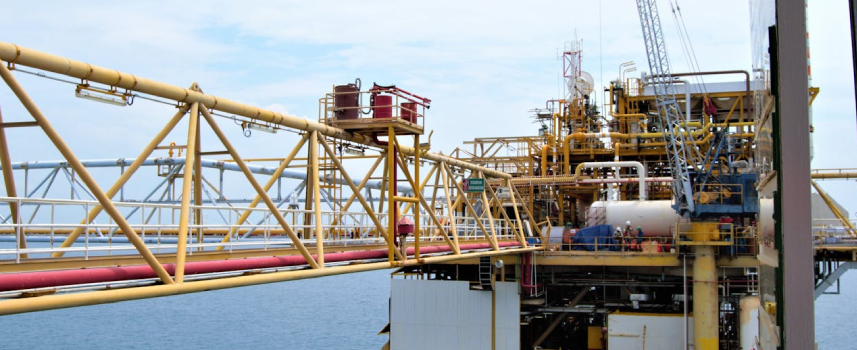
Most rolling bearings are built to handle tough conditions. But oil and gas drilling combines several challenges at once in a way that pushes standard components to their limits and sometimes beyond. This is something we also explore in our guide to
deep groove ball bearings in mining and oil and gas machinery.
The sheer weight involved is only the starting point. In deep drilling operations, the drill string can weigh hundreds of tonnes, placing high radial loads on the bearings supporting the hoisting system. That weight is constantly shifting as the string is raised, lowered, and rotated. This puts continuous and changing stress on the inner and outer rings of the bearings. Add to that the shock loads that travel up through the drill string every time the drill bit hits hard rock, and it becomes clear why standard bearings often struggle.
Dirt and contamination are a constant presence on drilling rigs. The thick fluid used to keep the drill bit lubricated and bring rock cuttings back to the surface gets everywhere. Fine particles become airborne and settle on equipment, finding their way into bearing raceways and causing surface fatigue on rolling elements. On offshore rigs, salt spray from the sea adds a corrosive layer to the problem. Any of this material getting into a bearing can damage its inner and outer races, break down its
lubrication, and cause it to wear out far sooner than it should.
Temperature is another factor. Arctic drilling exposes equipment to extreme cold. Desert and tropical rigs face sustained heat. Both ends of the spectrum affect how well bearing lubrication works, and bearings that are not specifically designed for these conditions will underperform. In high-speed applications such as top drive systems, heat generation from friction becomes an additional concern that influences both bearing selection and lubrication requirements.
And then there is the simple reality that drilling rigs do not stop. Unlike a factory that runs in shifts or shuts down for weekends, a drilling operation runs continuously, often for weeks or months at a time. Bearings must keep performing throughout, with little opportunity for routine maintenance in between.
Choosing the Right Roller Bearing for Drilling Applications
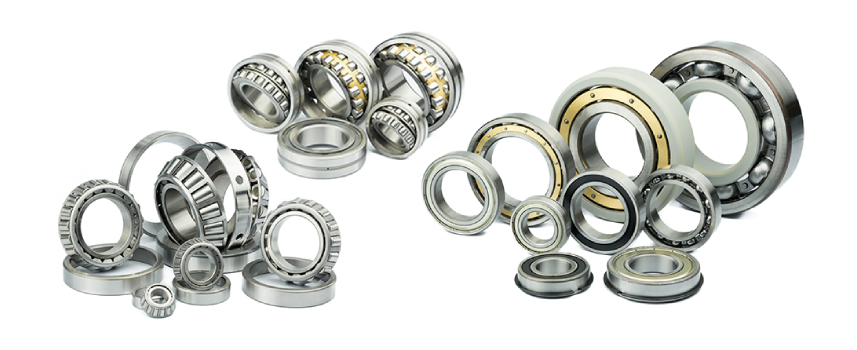
Choosing roller bearings for oil and gas drilling is not the same as choosing bearings for most other applications. Our guide on how to choose the right bearing for your machine application is a good starting point, but drilling environments bring additional factors that need careful consideration.
Matching the Bearing Type to the Application
Different types of roller bearings suit different roles on a drilling rig. Understanding which bearing type fits which application is one of the most important steps in getting the specification right.
- Tapered roller bearings are widely used in drilling hoisting systems because of their ability to handle combined radial and axial loads simultaneously. Their tapered rolling elements and contact angle allow them to support both the weight of the drill string and the lateral forces generated during rotation. This makes them perfect for crown block and traveling block applications where forces act in multiple directions at once.
- Spherical roller bearings are the preferred choice where misalignment is a concern. Their double row rollers and curved outer raceway allow the bearing to accommodate shaft deflection without compromising load capacity. This makes them well suited to riser tensioner applications on offshore vessels, where the constant movement of the vessel introduces flex and misalignment into the system.
- Cylindrical roller bearings, with their high radial load capacity and ability to accommodate axial displacement, are commonly found in top drive systems, which are the motorised units that rotate the drill string. Their linear contact between rolling elements and raceways makes them an efficient choice where high radial loads and speed are the primary demands.
Each bearing type has specific requirements in terms of lubrication, sealing, and load ratings. Matching the right rolling bearing to the right application is what separates reliable long-term performance from premature bearing failure in the field.
Load Capacity and Safety Margins
Load capacity needs to reflect the real demands of the job; not just the average load, but the peak loads and shock loads that occur regularly in drilling operations. Bearings sized only for typical conditions will be pushed beyond their limits when conditions change, leading to premature wear and the risk of unexpected bearing failure.
A safety margin above the calculated maximum load is not a nice-to-have in drilling applications but a basic requirement. In equipment carrying hundreds of tonnes, the dangers of getting this wrong extend well beyond a component replacement.
Sealing and Contamination Protection
In an environment with constant contamination and limited safe access for maintenance, sealed bearings with effective protection for their inner and outer rings directly determine how long a bearing lasts. Contaminants that find their way into the raceway cause surface fatigue on rolling elements, degrade lubrication, and accelerate wear in ways that are difficult to detect until failure is already imminent.
Look for bearings with sealing systems specifically designed for the contamination levels found on drilling rigs, not general-purpose seals adapted from lighter-duty applications. The difference in service life between a well-sealed bearing and a poorly sealed one in this environment can be significant.
Material Quality and Construction
Material quality and construction matter more in drilling environments than in most others. The combination of heavy loads, contamination, temperature extremes, and continuous operation means that differences in how a bearing is manufactured, such as the materials used, the precision of the rolling elements, the quality of the heat treatment process all have a direct and measurable impact on performance and service life.
Not all roller bearings that meet the same dimensional specification perform equally in the field. In safety-critical drilling applications, specifying bearings from manufacturers like Timken with a proven track record in oil and gas environments is not just good practice but an important risk-management decision.
How Bearing Units Solve the Safety Problem
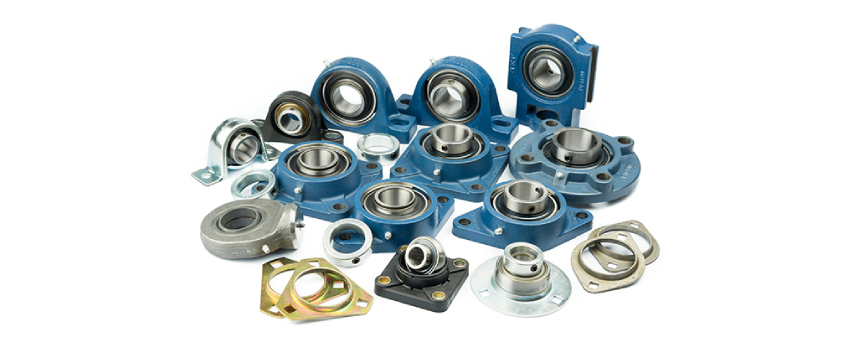
Choosing the right roller bearing is the foundation, but in the most demanding and dangerous applications on a drilling rig, a standard roller bearing on its own is often not enough. This is where
bearing units come in.
What Is a Bearing Unit?
A bearing unit is a complete, ready-to-install package. This includes the bearing itself, its housing, lubrication, and sealing all enclosed together in a single unit before it even arrives on site. Rather than fitting a bare bearing and managing its lubrication and sealing separately, a bearing unit arrives preset and pre-greased, with no adjustment needed.
Once installed, the seals keep lubrication inside and contaminants outside for the full working life of the unit, with no need for anyone to touch it until it is due for a scheduled replacement.
The Safety Risk of Bearing Maintenance at Height
This matters enormously in drilling applications. The crown block, for example, sits at the very top of the derrick, sometimes thirty or forty metres above the rig floor. Maintenance workers have to climb up to it regularly and in some cases daily to lubricate the bearings inside it, as lubrication in roller bearings reduces friction, dissipates heat, and protects against corrosion.
This climb has to happen in whatever conditions the rig is operating in: wind, rain, heat, cold, or the pitch and roll of an offshore vessel. It is one of the most hazardous routine tasks on a drilling rig.
Timken Sheave Pac Bearing Assembly: Built for the Rig
The Timken Sheave Pac is a bearing unit developed specifically for crown block, traveling block, and riser tensioner applications on drilling rigs. Built with advanced triple-lip seals, it is designed to stay lubricated for an entire duty cycle without any intervention. It arrives at the rig fully preset, pre-greased, and sealed. This reduces the risk of incorrect installation or contamination during fitting. It is also designed to be a direct replacement for the standard bearing assemblies already in use on most rigs, meaning it can be fitted into existing equipment without any modifications.
The result is a meaningful improvement in worker safety. No daily climbs to the top of the derrick. Less handling during installation. And a bearing unit that is far less likely to fail unexpectedly mid-operation. This keeps both the rig and the people working on it safer.
Conclusion
Roller bearings are small parts that play an outsized role in keeping drilling rigs safe and operational. From the top of the derrick to the tensioning systems on floating vessels, the performance of roller bearings affects the safety of the people and equipment depending on them every day. Getting the bearing selection right and matching it to the real load demands, contamination levels, and maintenance realities of the drilling environment is one of the most important decisions you can make for rig safety and reliability.
SLS Bearings supports oil and gas operators and other industries with roller bearing solutions suited to the demands of drilling applications. Visit our
Oil & Gas industry page to learn more, or
contact us for expert guidance on bearing selection for your specific application.

 sg
sg


 Contact Us