Industrial facilities often face labour shortages, higher order volume, and pressure for faster internal transportation. Autonomous mobile robots (AMRs) help reduce manual handling by transporting goods across a warehouse floor, assembly lines, loading docks, and manufacturing environments with less direct human intervention.
Here at SLS Bearings, we explore how AMRs are used as a natural extension of motion,
robotics, and automation solutions that help our customers operate efficiently.
What is an AMR?
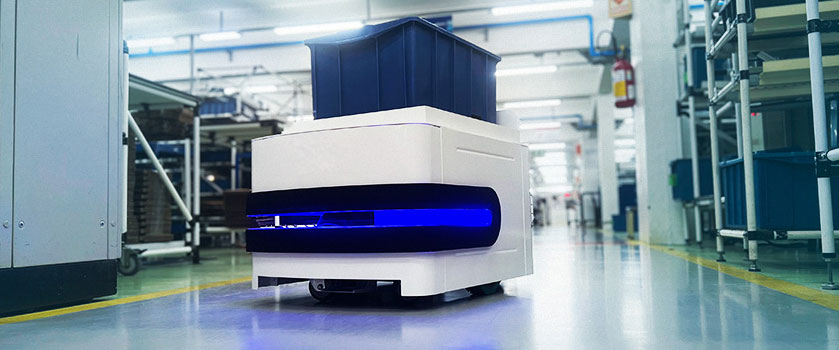
AMRs are intelligent mobile robots that transport loads autonomously in industrial settings. They use onboard software instead of fixed paths, and they are designed to navigate without human control.
AMRs adapt to dynamic environments and routes in real time to avoid obstacles, making them suitable for complex environments where human workers, forklifts, pallets, and robots share aisles. They can also allow rapid deployment and integration with existing systems, while Automated Guided Vehicles (AGVs) often need civil works or route infrastructure.
How AMRs Work: Navigation, Sensors, and Decision-Making
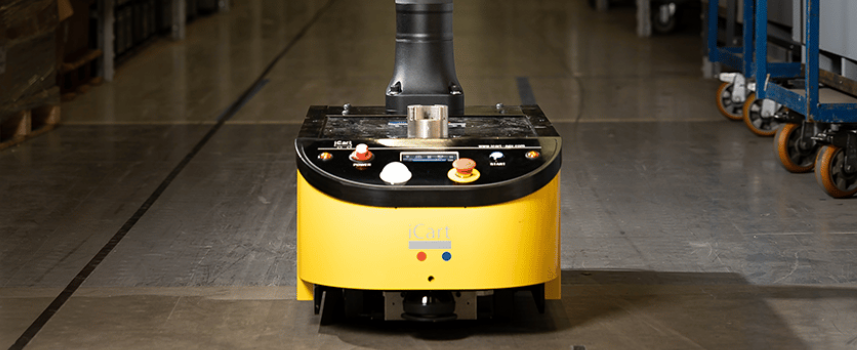
AMRs combine perception, decision-making, and motion to adapt to dynamic environments. They are programmed to work without direct human control: perception lets the robot “see”, decision-making tells it what to do, and motors move the load.
AMRs use advanced sensors for autonomous navigation, including lidar sensors, depth cameras, ultrasonic sensors, safety bumpers, and light detection technology. These sensors enable obstacle detection and collision avoidance while supporting safe stopping.
They operate using Simultaneous Localisation and Mapping (SLAM) technology, which lets the robot map and understand its position relative to racks, walls, doors, and workstations. It operates by choosing safe routes from receiving to storage, storage to picking, or production to dispatch, and can avoid blocked aisles by taking another path.
Artificial intelligence, machine learning, real-time data, and onboard data processing help AMRs classify temporary blockages, pedestrians, and pallets, while edge processing allows fast decisions without joystick control. They can operate 24/7 with low downtime due to advanced Li-ion battery technology.
Well-designed AMRs also connect with IoT platforms and other intelligent systems. The integration of AI and IoT enhances their capabilities across industries by allowing AMRs to receive tasks and collect data for continuous improvement.
To understand the best way to
utilise autonomous robots in your industrial process, review our insights from our expert SLS team.
Types of AMRs and Their Industrial Applications
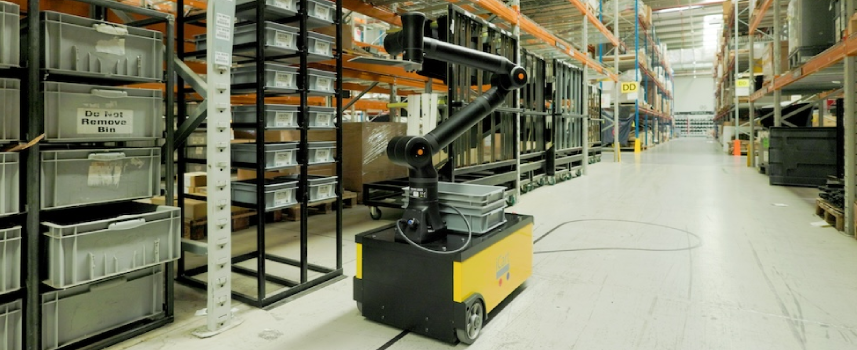
Autonomous mobile robots come in several forms, each built to perform tasks for specific loads and workflows:
- Pallet and heavy-load AMRs: Move pallets between receiving, buffer storage, production, and shipping. They can reduce manual labor in warehousing by moving heavy loads and can support safer material transport near loading docks.
- Cart-towing AMRs: Designed to pull carts through production lines on milk-run routes. They are useful in electronics and automotive plants where skilled workers need timely delivery of parts.
- Shelf, rack, and tote AMRs: Support goods-to-person picking by transporting inventory autonomously and optimise warehousing and supply chain processes by streamlining inventory management and order fulfillment.
- Specialised AMRs: Include conveyors, lifts, or robot arms and are increasingly used for complex tasks beyond simple transport.
Industrial Examples
- Aerospace Industry: Handling of high-precision components
- Healthcare Industry: Delivering medical supplies within hospitals
- F&B Industry: Delivering items and assisting in agriculture by autonomously harvesting crops
- Logistics Industry: Streamlining inventory management and transportation
To find out what
robotic automation solution your industry requires, reach out to SLSPRO's expert team.
Key Benefits of Deploying AMRs in Your Facility
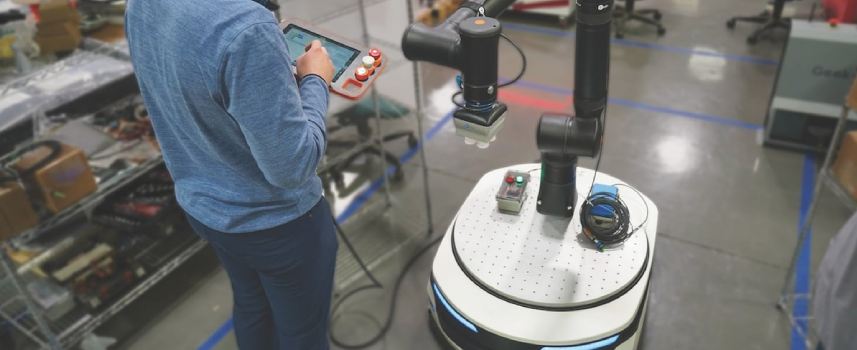
Autonomous mobile robots are a valuable asset for operational and workflow efficiency across various industries.
AMRs reduce labor-intensive transport by handling material handling and internal transportation. Software lets you assign AMRs to various tasks, routes, and shifts, making them flexible during order volume changes or when introducing new product lines. By automating such processes, this lets human workers focus on inspection, picking, quality checks, and other higher-value work.
They can also improve workplace safety by handling dangerous tasks and reducing fatigue from manual labor. Equipped with speed limits, emergency stops, and certified safety functions, they are designed to work safely alongside human workers.
In addition, AMRs help maintain consistent workflow in warehouses by adapting to real-time conditions. They also collect data on travel time, waiting time, congestion, and utilisation. With proper maintenance, dashboards can highlight dust interference, worn wheels, weak batteries, or sensor issues before downtime grows.
What to Consider When Choosing an AMR for Your Operations
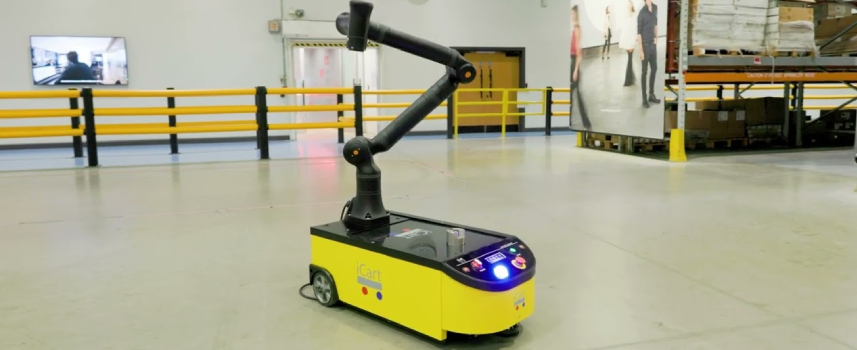
Tips for consideration for integrating AMRs in your process:
- List your process: Record your top material flows, such as receiving to storage, storage to packing, or line feeding. Then check payload, aisle width, turning radius, cart compatibility, floor condition, ramps, humidity, and temperature.
- Review AMR integration: While AMRs can run stand-alone, the biggest gains often come from integrating them with existing systems. Confirm APIs, cybersecurity, wireless coverage, and reporting needs.
- Have a safety plan: Define pedestrian routes, forklift lanes, restricted areas, crossings, and emergency exits. For safety planning, ISO 3691-4 is a useful reference for driverless industrial trucks and mobile robotics in industrial environments. Ensuring compliance should include risk assessments, signage, staff training, and route validation.
- Plan lifecycle support: Be informed about spare parts, local service, battery replacement, software updates, operator training, and maintenance schedules. For assistance with industrial robots, SLS Bearings can help assess whether standard autonomous mobile platforms, customised top modules, or phased deployments are the right fit for your site.
Conclusion
An autonomous mobile robot can modernise material handling by combining autonomous robotics, intelligent software, and flexible movement. Compared to automated guided vehicles, AMRs are better suited to dynamic environments where layouts, demand, and workflows change, and are a proven asset to improving workplace efficiency.
If you are comparing AMRs or
broader robotic automation solutions, SLS can help review your facility layout, payloads, safety needs, and ROI.
To discuss the right AMR approach for your operations,
contact us now.

 sg
sg

-for-Industrial-Facilities.webp)

 联系我们
联系我们