Pneumatic valves are used in various applications, from industrial automation lines and train doors to demanding offshore platforms and onshore terminals. In the oil and gas industry, these valves are used to open, close, or throttle process media, such as natural gas, condensate, and produced water.
Much like how
roller bearings are critical to drilling safety, pneumatic valves are essential to reliable flow control. SLS Bearings supports Singapore and regional oil and gas projects with complete pneumatic systems, working with Festo as a trusted manufacturer.
Why Pneumatic Valves Are Critical to Control and Safety in Oil and Gas Operations
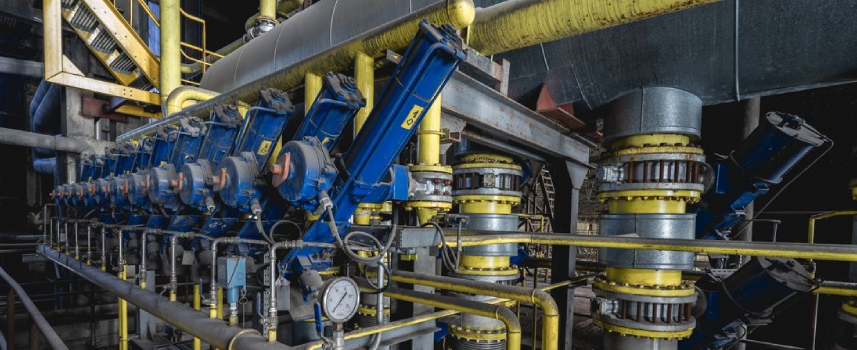
Pneumatic valves control pneumatic systems by modulating flow in wellheads, separators, and flare systems. Their primary function is to control the movement of actuators that operate large ball and butterfly valves across the facility. Pneumatic systems transmit energy using compressed air, which can be easily transported through pipes, making them ideal for widespread distribution on large sites.
There are three key applications of pneumatic control valves in the
oil and gas industry:
- Upstream wellheads: Managing the flow of fluid and gas for offshore drilling and extraction sites
- Midstream pipelines: Managing crude oil and gas distribution in pipelines, controlling actuator movement on pipeline valves, and operating emergency safety shutdowns
- Downstream refining: Controlling the flow and directing separated crude oil during refining processes
Safety Applications
Pneumatic control valves provide fast response, repeatable positioning, and fail-safe spring return options that move valves to a safe state during power or air supply loss. These valves are critical in hazardous zones because they do not produce sparks or explosions.
Compressed air or inert gas powers air-operated valves, keeping the control side safely isolated from process fluids. In offshore and coastal environments, corrosion-resistant pneumatic valves are generally less prone to damage from harsh conditions, making them essential for tight shut-off under harsh chemicals. Pneumatic valves are also used for safety shutdowns in emergencies, making pneumatic power indispensable on any production facility. Thus, they are widely deployed due to rapid response, durability, and safety.
Types of Pneumatic Valves Used in Oil & Gas Industry
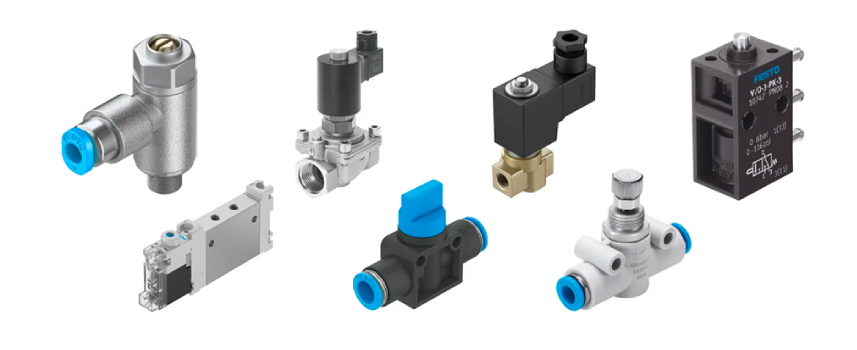
High-pressure Solenoid Valves
A solenoid valve uses an electrical signal to activate a magnetic coil, which moves a plunger to open or close the valve and direct airflow.
Usage: Fast response times and straightforward on/off control, which make them a practical choice for emergency shutdown signals, automated process sequences, and remote actuation. Their compact design and low power consumption make them easy to integrate into instrument panels and valve terminals. Additionally, these solenoid coils are explosion-proof to ensure safe operation in zones where flammable gas may be present.
Air Pilot Valves
An air pilot valve uses a small amount of compressed air rather than electricity to switch a larger valve or actuator.
Usage: Suitable for fully pneumatic control circuits where there is no electrical infrastructure or if removing electrical equipment is a safety requirement. In oil and gas facilities, air pilot valves operate reliably in harsh environments without the risk of electrical faults. They are commonly used for controlling line pressure and flow isolation in midstream and transmission networks.
For a more detailed comparison of how solenoid and air pilot valves differ in practice, see our guide on
understanding pneumatic valves: solenoid vs air pilot.Directional Control Valves
Directional control valves (DCV) determine which path the compressed air takes through a pneumatic system, controlling whether an actuator extends, retracts, or holds position. They are commonly described by the number of ports and positions they offer:
- 3-way valves: Three ports and two positions, commonly used to control single-acting cylinders or spring return actuators
- 4-way valves: Four or five ports and are the standard choice for controlling double-acting cylinders, where air must be directed to both sides of the piston to control movement in both directions.
Usage: Used to direct hydraulic oil or compressed air to activate or stop actuators, rams, and cylinders in subsea operations and drilling rigs. They function in hazardous environments, controlling chemicals and process flows efficiently. On oil and gas sites, DCVs are found throughout process and utility systems wherever actuator direction needs to be managed precisely and reliably.
Key Selection Criteria for Pneumatic Valves in Oil and Gas
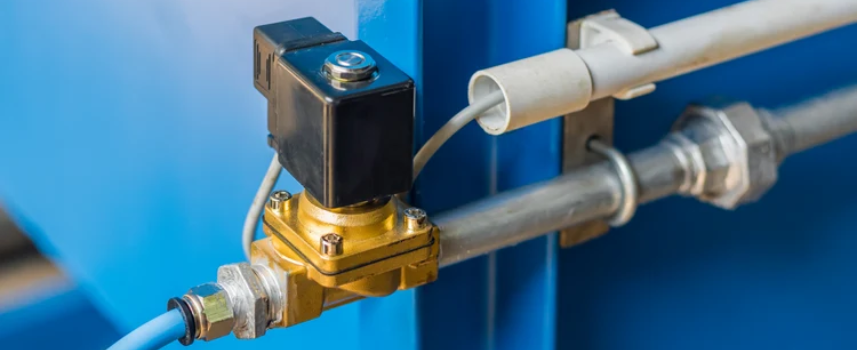
The four main criteria when choosing a suitable pneumatic valve are: pressure ratings, material compatibility, safety certifications, and environmental protection. This ensures safe and smooth operations while avoiding critical failures.
Pressure Ratings and Flow Capacity
Pneumatic valves on oil and gas sites must handle instrument air pressure, often 6 to 10 bar, and deliver enough airflow to move large actuators at the required speed. Valves that are too small restrict flow rate and slow actuator movement, so it is important to verify that the valve's Kv or Cv matches the actuator volume and target cycle time, with appropriate safety margins for pressure drop.
Material Compatibility and Corrosion Resistance
Pneumatic valves are constructed from materials like brass, stainless steel, or technopolymers. For offshore oil and gas environments, stainless steel or coated alloys are often used because exposure to salt spray and aggressive chemicals can cause damage, causing friction, sticking, or leakage.
Safety Certifications and Hazardous Area Requirements
Many oil and gas installations are classified as hazardous areas where explosive gas atmospheres may be present. Solenoid valves and electrical components on valve terminals must carry relevant approvals and local certifications to ensure the valves are explosion-proof.
Environmental Protection, Ingress Rating, and Temperature
IP ratings describe how well a valve's electronics and solenoid coils are protected from dust and water. IP65 keeps out dust and low-pressure water jets, while IP67 or IP68 protects against temporary or continuous submersion. Additionally, pneumatic valves must suit local ambient extremes, as offshore and desert operations may see temperature swings. Proper enclosure selection and mounting orientation also contribute to extended service life and fewer failures.
Maintenance and Reliability of Pneumatic Valves in Demanding Environments
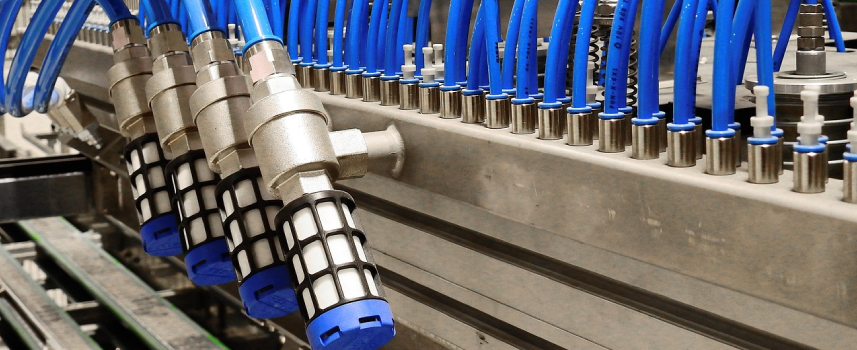
Pneumatic valves require regular inspection, clean compressed air, and proper installation to reach their expected service life.
Practical maintenance steps include:
- Scheduled function testing of ESD valves
- Leak checks of fittings, pilot lines, and exhaust ports
- Periodic replacement of worn seals, springs, and solenoid coils
- Verifying actuator torque and closing times remain within specification
The Role of Valve Terminals in Complex Pneumatic Systems
Valve terminals are essential to oil and gas facilities as they help to facilitate automated control systems and regulate fluid flow for several components. This ensures fewer fittings, easier troubleshooting, clear labelling, and scalable capacity.
SLS Bearings partners with Festo to provide valve terminals with diagnostic information, such as coil monitoring and channel status, that helps maintenance teams identify failing valves before they cause downtime. Our team also provides technical support and training to keep pneumatic systems performing safely over extended periods.
Discover how SLS can specify, supply, and support complete
valves and valve terminal assemblies for your facility.
Conclusion
Pneumatic valves and valve terminals provide safe, precise, and reliable control of high-pressure flows across oil and gas production, processing, and export systems. Choosing the right pneumatic solution means considering directional control options, safety and quick exhaust functions, material and certification needs, and the advantages of modular valve terminals.
SLS supplies a range of high-quality
pneumatic valves, solenoid valves, and valve terminals tailored to demanding offshore and onshore environments.
Contact us at SLS Bearings if you are planning a new project, an upgrade, or need help finding the right system.

 sg



 联系我们