Until recently, industrial robotics was the domain of large manufacturers. The cost and complexity of traditional industrial robots put them out of reach for small and medium-sized businesses. Collaborative robots, also known as cobots, have changed that. Compact, affordable, and designed to work alongside human workers, cobots are opening up flexible automation to small businesses. For small manufacturers looking to grow, cobots today represent one of the most accessible and cost-effective tools available across different industries.
Unlike traditional industrial robots that require safety caging, specialist programming, and dedicated floor space, cobots are built for shared workspaces where human operators and robot systems work side by side. Their collaborative features and the ability to detect direct physical interaction, make them a practical fit for production environments where people and automation need to coexist safely.
Why Cobots Are Ideal for Small Manufacturers
The case for cobots in small-scale manufacturing comes down to a few practical realities that set them apart from traditional robots.
Cost is the most immediate factor. Traditional industrial robots require significant capital investment, specialist installation, and dedicated technical expertise. Cobots are designed to be affordable enough for smaller operations, with simpler setup and lower total cost of ownership. Many cobots can be programmed by production staff without robotics expertise, using intuitive teach-by-demonstration methods that require no coding knowledge. This cost-effectiveness makes cobot automation accessible to businesses that cannot justify the overhead of a full industrial robot system.
Flexibility is equally important for smaller manufacturers who often run small batches or switch between products frequently. Unlike fixed industrial automation built around one task, a cobot can be redeployed to a different collaborative robot application, reprogrammed to perform new tasks, and moved to a different part of the facility with minimal disruption. This adaptability makes cobots a practical fit for businesses whose production processes change regularly.
Physical footprint matters too. Factory space is a real constraint for smaller operations, and cobots are designed to be compact enough to work on a standard production bench or alongside existing equipment. They do not require the dedicated floor space and safety barriers that traditional robots demand. Advanced force-limiting sensors allow cobots to
work safely alongside human workers without barriers, as long as a proper risk assessment has been carried out before deployment, meeting the safety requirements for human-robot collaboration in the shared workspace.
Critical Components That Make Cobots Work
Understanding what goes into a collaborative robot helps manufacturers make better decisions about selection, integration, and maintenance.
Force-limiting sensors are fundamental to worker safety in collaborative robotics. These sensors monitor the forces the robot arm exerts during operation and stop or slow movement immediately if unexpected resistance is detected, such as contact with a person. The sensitivity and reliability of these sensors determines how closely a cobot can work alongside human operators and what tasks it can safely perform without guarding.
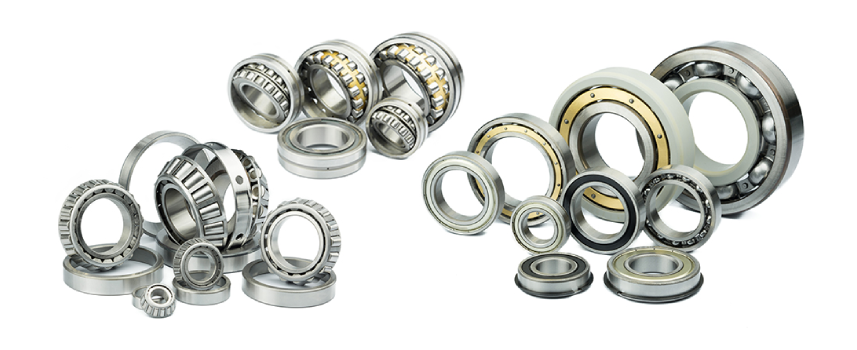
Precision bearings like
roller bearings are critical to the smooth, accurate movement of every joint in a cobot arm. Each joint relies on bearings that can handle the repetitive, controlled movements of production tasks while maintaining positional accuracy over long operating periods. The quality of these bearings directly affects how consistently the cobot performs and how long it operates before components need attention.
Lightweight
actuator systems drive the movement of each joint, converting electrical signals into precise mechanical motion. In cobots, actuators need to be powerful enough for the task whilst remaining lightweight to keep the overall arm weight manageable and the system's energy consumption low.
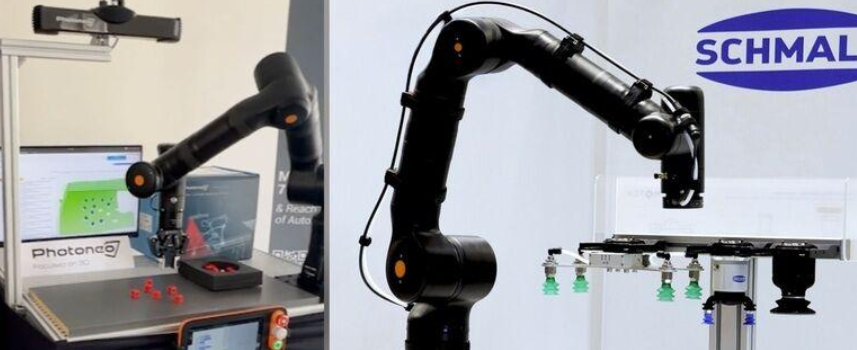
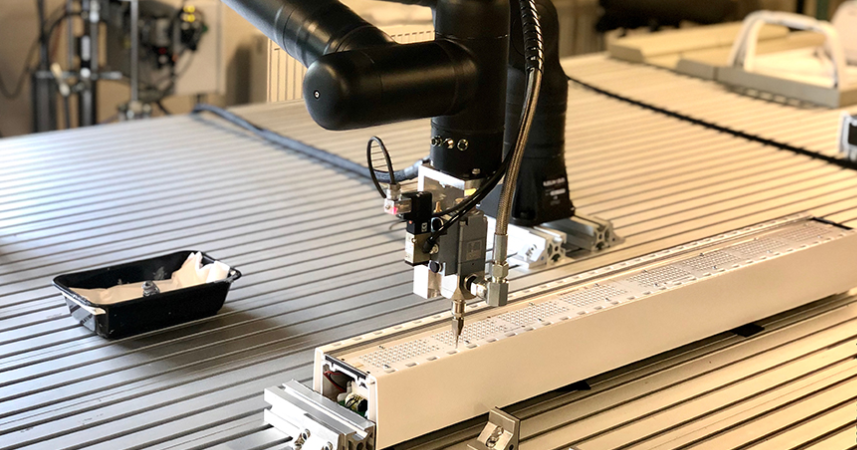
Arm tooling and end effectors are what allow a cobot to interact with the physical world. From grippers and suction cups for pick and place applications to screwdrivers, welding tools, and cameras for visual inspection, the right end effector determines what tasks the cobot can perform. Quick-change tool systems allow a single cobot to switch between end effectors without manual intervention, significantly extending the wider range of work one unit can cover.
Browse our
cobots range to explore the options available for your production environment.
Applications of Cobots in Small-Scale Manufacturing
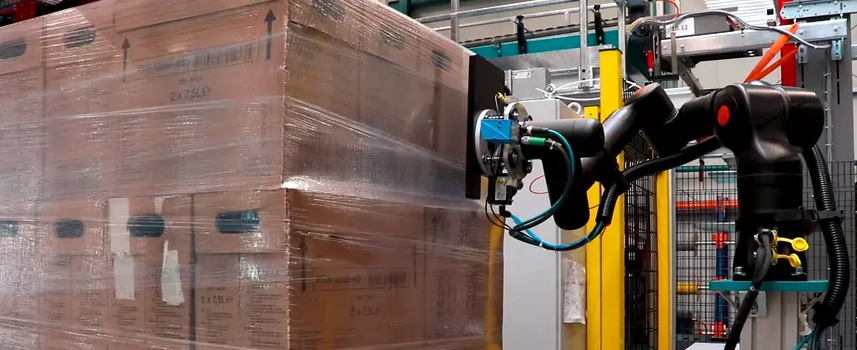
Cobots are versatile enough to take on a wide range of tasks in small manufacturing environments. The following are among the most common and practical starting points, with
real-world cobot applications across manufacturing demonstrating the impact they can have.
Machine tending, or loading and unloading parts from CNC machines, injection moulding equipment and other production machinery, is one of the most straightforward cobot applications. It is repetitive, time consuming, and often requires an operator to stand and wait between cycles. A cobot handles it consistently without fatigue, freeing the operator for tasks that require creativity or judgement.
Quality control and visual inspection are high-value applications in industries where product quality is critical. Cobots equipped with vision systems can check parts for dimensional accuracy, surface defects, or correct assembly including circuit board assembly and circuit boards in the electronics industry, at speeds and consistency levels that manual inspection struggles to match across long production runs.
Pick and place tasks involve picking components from one location and placing them precisely into another. Whether handling delicate components in the pharmaceutical industry, packaging finished goods in the packaging industry, or assembling parts in the plastics industry, cobots perform these tasks reliably across thousands of cycles.
Material handling, or moving parts or components between workstations, conveyors, or storage areas reduces the physical demands on human workers and keeps production processes flowing without delays caused by manual transport. In industries with increasing demand and limited labour availability, this capability directly supports production capacity.
Arc welding and spot welding are also established cobot applications, particularly in the automotive industry and among manufacturers producing fabricated metal components in small batches. Cobots bring consistency to welding tasks that are hazardous or physically demanding for human workers over extended periods.
ROI & Cost Effectiveness Considerations
Return on investment is the question most small manufacturers ask first, and it is a reasonable one given the upfront cost involved.
Payback periods for cobots in small manufacturing environments typically range from one to three years, depending on the application, volume, and labour costs offset. Applications that run across multiple shifts, or that replace particularly labour-intensive tasks, tend to achieve payback faster. The first cobot deployment is often the hardest decision, but subsequent deployments become easier as the business builds familiarity with the technology and the returns become visible.
Labour savings are the most direct financial benefit. A cobot running consistently across a shift covers work that would otherwise require one or more operators. Unlike traditional robots, cobots do not require dedicated safety infrastructure that adds to the overall cost. For businesses facing recruitment challenges or rising wage costs, this consistency has real financial value that compounds over time.
Productivity gains extend beyond replacing labour. Cobots increase productivity by maintaining a consistent pace across an entire shift, reducing the variation that leads to quality issues and rework. Fewer defects mean less waste, lower costs, and better product quality, all benefits that flow directly to the bottom line and improve the total cost of ownership calculation.
Understanding the
long-term value of your cobot investment goes beyond the initial payback calculation. Proper lifecycle management, including maintenance schedules, software updates, and planned component replacement, protects the investment and ensures the automation system continues to deliver value throughout its operational life.
Getting Started with Cobots in Your Facility
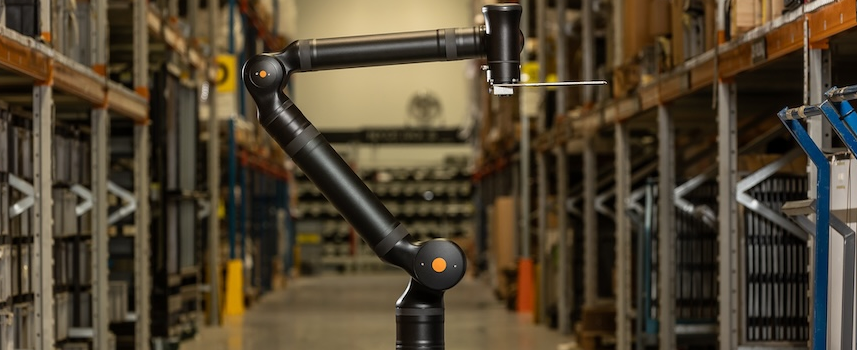
The first step for most small manufacturers is identifying the right application. Look for repetitive tasks that are physically demanding or prone to human error. These are typically the easiest starting points and the ones that deliver the clearest return. A single well-chosen collaborative robot application is a better starting point than an ambitious multi-cobot deployment that takes on too much complexity at once.
From there, a risk assessment is required before deploying a cobot without safety fencing. This assessment evaluates the forces involved, the speed of operation, the proximity of human workers, and any other factors that affect human safety in collaborative automation environments. A qualified system integrator can guide this process and handle the initial installation and programming.
It is also worth thinking about the components that go into and around the cobot system: the bearings, actuators, end effectors, and peripheral equipment. Sourcing these from reliable suppliers with experience in industrial applications reduces the risk of compatibility issues and ensures access to replacement parts and technical support. To understand
how cobots are being deployed across industries, looking at sector-specific implementations can help identify what is possible and what to plan for.
For small and growing manufacturers,
Kassow Robots is a cobot and robot arm manufacturer worth considering. Their 7-axis robot arm is designed for versatility and ease of integration across a wide range of production applications in collaborative robots.
Conclusion
Cobots have made flexible automation accessible for small and growing manufacturers. The barrier to entry has never been lower, and the range of applications, from machine tending and pick and place to quality inspection and material handling, means there is a practical starting point for almost every production environment.
Getting started does not require a large team or deep technical expertise. It requires identifying the right application, choosing reliable components, and working with partners who understand both the technology and the production realities of your industry.
Here at SLS Bearings, we support manufacturers at every stage of their automation journey, from component selection to technical guidance.
Contact our SLSPRO team to discuss the right cobot solution for your facility.

 sg
sg


 Contact Us